
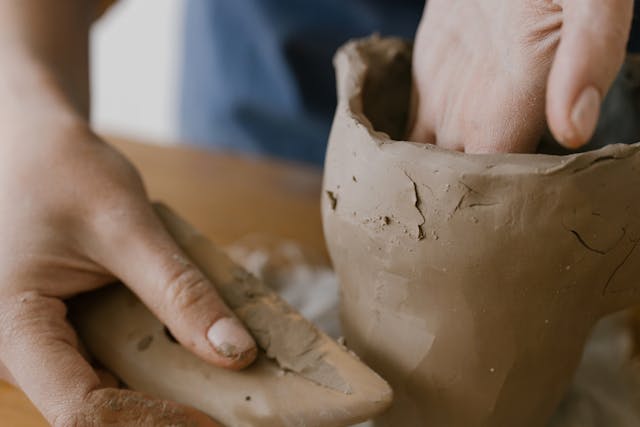
How Different Clays Shape Texture, Color, and Surface Character
In handmade ceramics, glaze is only part of the final result.
The clay body underneath affects almost everything — texture, weight, edge softness, firing warmth, and even how light interacts with the surface.
Different clays behave differently in both raw and fired states. Some remain pale and refined. Others fire into deep earthy tones with visible mineral specks and irregular textures.
These variations are not flaws. They are part of the material itself.
Raw Clay Colors Before Firing
Before entering the kiln, clay can appear in a wide range of natural tones depending on its mineral composition.
White Clay
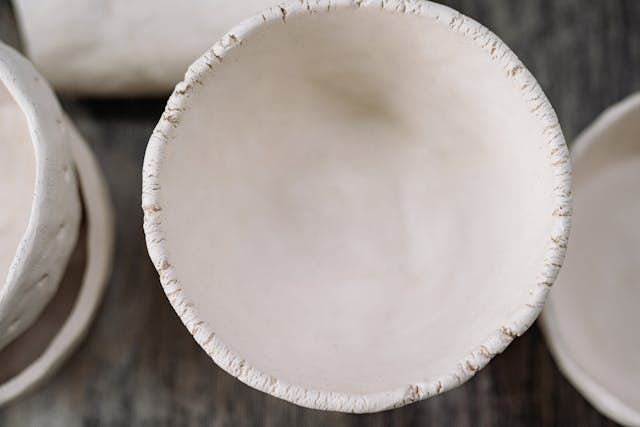
White clay bodies usually contain fewer iron impurities and fire into lighter, cleaner surfaces.
In raw form, they often look pale gray, cool beige, or soft cream.
After firing, they create a quieter and more refined atmosphere, especially under transparent or lightly tinted glazes.
White clays are often chosen for:
- delicate glaze colors
- soft shadow transitions
- clean edges and minimal visual noise
- lighter visual weight
They tend to emphasize form and proportion rather than texture.
Stoneware and Iron-Rich Clay
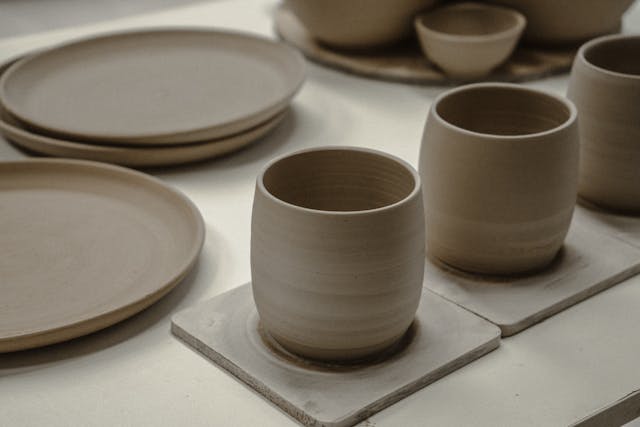
Iron-rich clay bodies contain natural mineral content that darkens during firing.
Raw clay may appear warm brown, gray-buff, olive, or reddish depending on moisture and composition.
After firing, the surface becomes denser, warmer, and more grounded.
These clay bodies often produce:
- visible speckles
- darker exposed edges
- heavier visual presence
- stronger contrast with glaze
They are especially suitable for rustic surfaces, carved textures, and pieces where material character is meant to remain visible.
Texture Changes After Firing
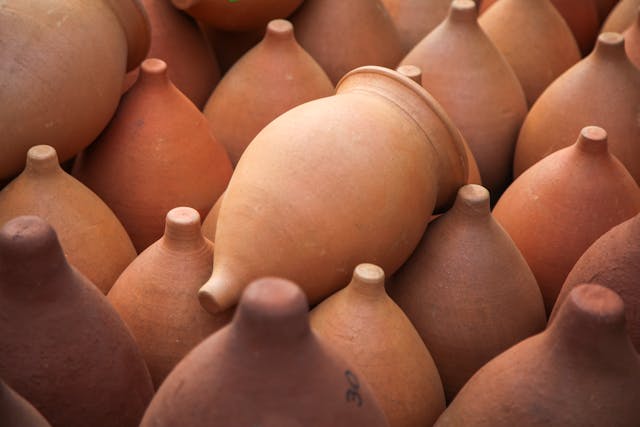
The kiln transforms clay completely.
A smooth raw surface may develop subtle grain after firing.
Mineral particles become more visible.
Some clays vitrify tightly and feel dense and stone-like, while others retain a softer, more open texture.
This is why two cups with the same shape and glaze can still feel entirely different in the hand.
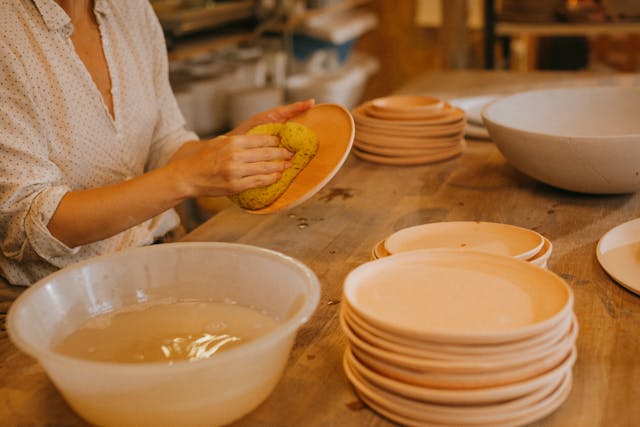
Smooth Clay Bodies
Finer clay bodies produce:
- cleaner curves
- softer touch
- more even glaze flow
- minimal surface interruption
These are often used for quiet forms and controlled glaze surfaces.
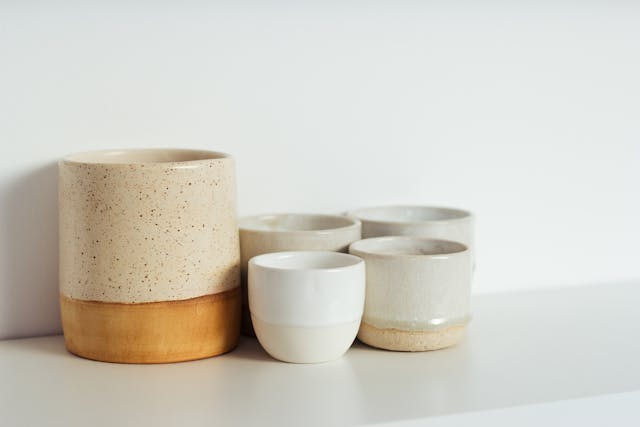
Coarse or Speckled Clay Bodies
Clays containing grog, sand, or iron particles create more texture and variation.
You may notice:
- small dark specks
- rougher exposed clay
- broken glaze edges
- irregular surface movement
These surfaces interact with light differently and often feel more tactile and organic.
Why Handmade Ceramics Vary Naturally
Unlike industrial ceramics, handmade pottery is not designed to eliminate variation completely.
Clay shifts during drying.
Minerals react differently in each kiln firing.
Glazes melt differently depending on thickness and placement.
Because of this, every piece develops slightly different:
- tone
- texture
- speckling
- edge definition
- glaze movement
This unpredictability is part of what makes handmade ceramics feel alive rather than mechanically identical.
Choosing Clay for Atmosphere
Different clay bodies create different emotional and spatial effects.
White clay often feels:
- lighter
- quieter
- more minimal
- more architectural
Iron-rich and darker clay bodies often feel:
- warmer
- earthier
- heavier
- more tactile
Neither is inherently better.
They simply create different relationships between object, light, and daily use.
In our studio, we choose clay bodies based not only on durability and firing behavior, but also on the atmosphere each material creates after firing.