
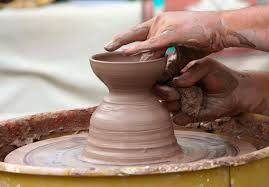
We use cups, bowls, and plates every single day — but when they’re handmade, they carry a story that factory ware can’t match. Making ceramics is equal parts science, patience, and, honestly, a little gamble with fire. Let’s take a slow walk through the journey, from raw earth to your morning coffee mug.
Step 1: The World of Clay
Not all clay is the same. Different clays give different personalities to the final piece:
Earthenware: Low-fired, soft, and porous unless glazed. Think terracotta flowerpots.
Stoneware: Stronger, denser, often with a warm gray or buff color. Perfect for mugs and dinnerware.
Porcelain: The diva of clays — refined, white, translucent when thin, but tricky to work with.
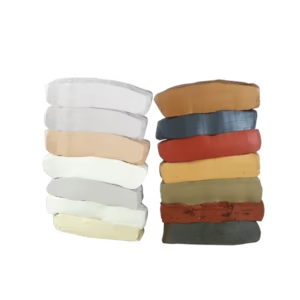
Fun fact: Chinese porcelain shaped global trade. Europeans spent centuries trying (and failing) to replicate it before discovering kaolin in the 18th century.
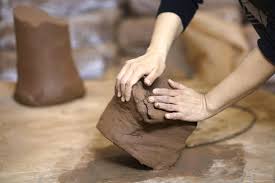
Step 2: Wedging — Why Potters Punch Clay
Wedging isn’t glamorous. It’s literally kneading clay to push out air bubbles and even the moisture. Skip it, and BOOM — your piece can explode in the kiln. Every potter has a story of hearing a “bang” mid-firing and opening the kiln to find shards everywhere.
Step 3: Shaping — Wheel vs. Hand-Building
There are two main routes:
Wheel-throwing: Classic spinning-wheel pottery, smooth and symmetrical.
Hand-building: Using coils, slabs, or pinching. Quirkier, more sculptural, less “perfect.”
East Asian traditions (like Japanese raku) often value the asymmetry of hand-building. In contrast, Western studio pottery leaned more toward the precision of the wheel until modern “wabi-sabi” aesthetics made hand-built cool again.
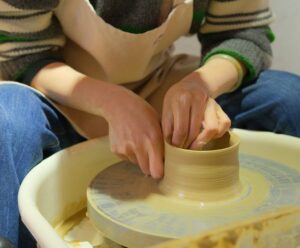
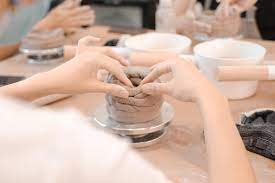
Step 4: Drying & Bisque Firing
Fresh clay is fragile, like wet chalk. Pieces need to dry evenly — too fast, and cracks appear. Then comes the bisque firing at lower heat. It hardens the clay while keeping it porous enough to absorb glaze later.
Failure story: rush the drying, and your “cup” turns into a cracked pancake.
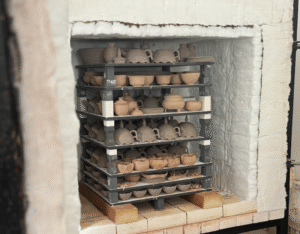
Step 5: The History of Glaze
Glaze is basically melted glass mixed with minerals. It makes ceramics waterproof and colorful. Ancient Egyptians were glazing faience beads 4,000 years ago. Chinese potters perfected celadon and later blue-and-white patterns using cobalt pigment — a style that traveled west and inspired European Delftware.
Today, glaze recipes are endless: matte, glossy, speckled, crystalline. But here’s the catch: glaze before firing looks NOTHING like the final color. Potters joke that glazing is 30% skill, 70% faith.
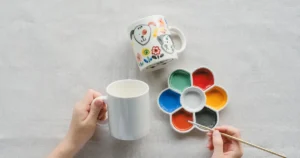
Step 6: Final Firing — The Kiln Drama
The glaze-coated bisque goes into the kiln for the big show. Temperatures can soar past 1200°C (2200°F). The clay vitrifies (turns glass-like), and the glaze melts into a glassy skin.
Different kilns = different results:
Wood-fired: Creates unpredictable ash patterns.
Gas-fired: Gives potters more control.
Electric kilns: Common today, stable and clean.
Traditional kilns: Like Japan’s anagama, where flames literally paint the clay.
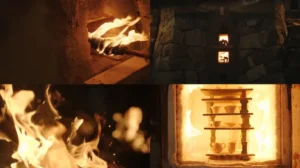
Potters often call kiln openings “Christmas morning” — you never know if you’ll get treasures or heartbreak.
Step 7: Oops Moments — When Things Go Wrong
Ceramics is full of “failures”:
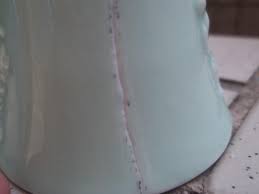
Cracks: From drying too fast.
Warping: From uneven shaping.
Pinholes or crawling glaze: Caused by dust or poor glaze chemistry.
Explosions: Thanks to hidden air bubbles.
But sometimes these “mistakes” become beauty marks. Collectors love glaze drips, smoky kiln marks, and off-center rims — it’s the charm of handmade.
Step 8: East vs. West — Different Ceramics Traditions
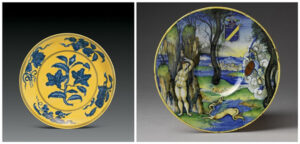
China: Known for porcelain, celadon, and blue-and-white. Precision, refinement, and global influence.
Japan: Raku and wabi-sabi aesthetics — embracing imperfection and simplicity.
Middle East: Brilliant lusterware and intricate tile traditions.
Europe: Delftware, majolica, and studio pottery revival in the 20th century.
Today’s collectors often mix styles — a rustic Japanese bowl with a Chinese porcelain plate and a modern American mug all on one table.
Step 9: Modern vs. Traditional
Modern potters have digital kilns, glaze calculators, and Instagram shops. Traditional potters relied on intuition, oral recipes, and wood kilns. Both worlds meet now — you’ll find potters using ancient forms but marketing them with TikTok videos.
What hasn’t changed? The patience required. Whether in a village workshop or a Brooklyn studio, you can’t rush clay.

Final Sip
So, that mug in your hand isn’t “just a mug.” It’s clay that traveled through thousands of years of history, survived the drama of the kiln, and came out carrying the fingerprints of its maker. That’s what makes handmade ceramics so different from the factory stuff — they carry a story, one sip at a time.
-
Sale!
In My Artist Era – Porcelain-Inspired Typography Poster, Ceramic Style Printable Wall Art, Minimalist Digital Download for Studio or Home
Original price was: $18.00.$10.00Current price is: $10.00. -

Regular Edge - Rectangular Ceramic Plate | Blue Underglaze Minimalist Design
Price range: $58.00 through $96.00 -
Sale!

Cool People Live Here – Porcelain-Inspired Typography Poster, Ceramic Style Printable Wall Art, Customizable Digital PDF Download Gift
Original price was: $18.00.$10.00Current price is: $10.00.