
Hey guys! Ever wondered how people made pottery thousands of years ago vs how studio potters do it today? The tools changed a lot, and in different parts of the world, people developed styles + tools adapted to local clay, fuel, climate, aesthetics. Here’s a deep dive into the evolution of pottery-tools, with country comparisons and what makes them special.
1. Starting from Scratch: Ancient Tools & Processes
Raw materials & shaping
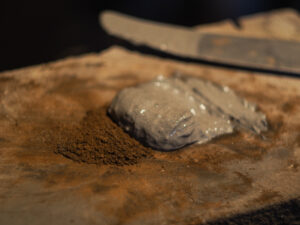
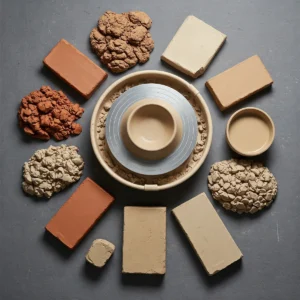
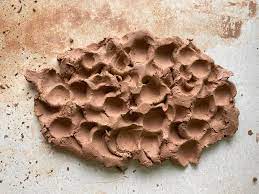
Clay gathering and preparation: Ancient potters usually dug clay from riverbanks, ponds, or hillsides. They removed rocks, coarse grit by hand or simple sifting. Sometimes mixed clay with organic temper (plants, straw, shells) to reduce cracking.
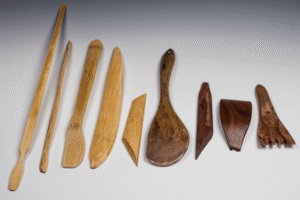
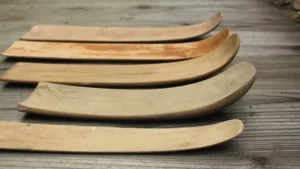
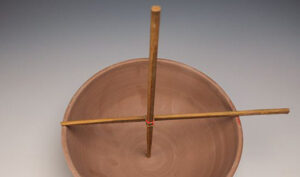
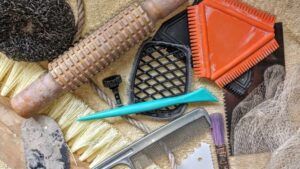
Tools for shaping by hand: Before wheels, techniques like coiling, pinching, slab building dominated. Tools would be sticks, shells, bones, stones, pieces of wood to smooth or carve. For example: comb-tools (like a comb) used to make geometric impressions (ridge patterns) in Neolithic pottery in Korea / Baltic regions. [01]
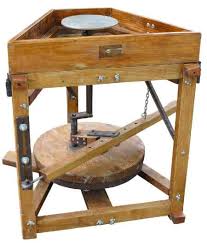
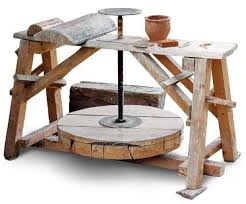
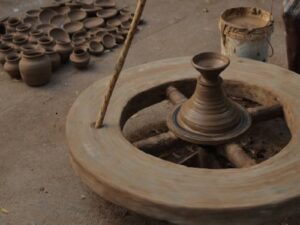
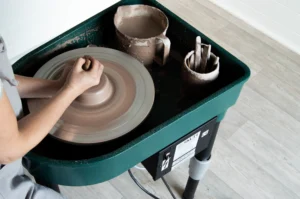
Potter’s wheel: One major leap. Around 4000-3000 BCE in Mesopotamia, potter’s wheel allowed more symmetry, speed. Before that, forms were more irregular. With a wheel, you get “throwing” methods. [02] [03] [04]
Kilns & Firing
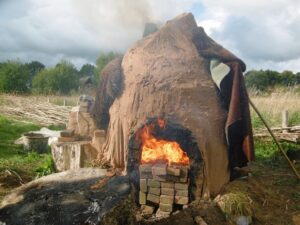
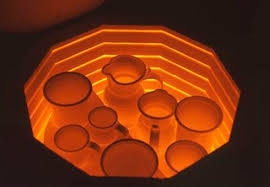
Early firings were open pits, small bonfires, or rudimentary clay/brick kilns. Very uneven temperature, smoky, could limit what you could glaze or how strong the clay body got.
In China, for example: dragon-kilns (“climbing kilns”): long kilns built on slopes, allowing high temperature and large batches. [05]
Also mantou-kilns (horseshoe-shaped) in North China: smaller, more manageable, good for certain wares like Ding ware, etc. [06]
Decoration & finishing
Polishing (burnishing) with stone or smooth wood. Using natural pigments, slips (thin clay wash), simple incisions or stamps. Tools: bone, carved wood, simple brushes (plant fibers), shells.
Glazing started later: early glazes in Mesopotamia; Chinese porcelain developed glaze + high-temp techniques. [07] [08] [09]
2. Modern Tools & Processes: What’s New, What’s Changed
Here are the big things that modern potters have that ancient potters didn’t (or barely):
Electric / motor-driven potter’s wheels: Precise control of speed, more consistent centering and shaping.
Advanced kilns: Electric kilns, gas kilns, even computer-controlled kilns. These help with temperature ramping, controlled atmosphere (oxidation / reduction), consistent firings.
Special tools & materials:
Metal ribs, rubber ribs, flexible scrapers.
Wire cutters to slice lumps of clay.
Extruders, slab rollers for making uniform slabs.
Spray guns or atomizers for glaze application.
Digital / laser tools for decoration (stencils, digital transfers).
Glazes & temp handling: More sophisticated glazes (synthetic / formulated), higher temp clays (porcelain, stoneware), precise measurement of fluxes, silica, alumina etc.
Safety, ergonomics, reproducibility: Modern studios have ventilation, safety gear, consistent raw material sources, lab testing (e.g. for glaze fit, thermal expansion).
3. Tool Differences in Different Countries & Styles
Every region’s traditions + environment shaped what tools people used, even when they had similar basic tech. Below are some country/style-based differences.
Pottery Tools Evolution Timeline
16th-18th c.
Europe: Pottery wheels, molds, trimming knives, majolica glazing tools.
Reference: V&A Museum
19th c.
UK/USA: Coal-fired industrial kilns, jiggering/jolleying tools, early electric wheels.
Reference: Smithsonian
20th c.
Global: Electric wheels, slab rollers, pneumatic tools, modern trimming, ergonomic tools.
Reference: Ceramic Arts Network
21st c.
Global: 3D-printed molds and stamps, digital kilns, programmable glazing, hybrid materials.
Reference: Deneen Pottery
 China
China
Traditional: Dragon kilns in southern China and mantou kilns in the north; handmade bamboo tools for trimming and smoothing; local kaolin clay for porcelain; cobalt oxide for blue-and-white painting.
Modern: Gas and electric kilns, slip-casting molds, digital decal printing, and temperature controllers used in Jingdezhen studios.
Reference: Britannica – Chinese Ceramics, Jingdezhen Ceramic Institute
 Japan
Japan
Traditional: Anagama and noborigama wood-fired kilns; bamboo ribs, wooden bats, and tools shaped by local clay traditions; “wabi-sabi” style imperfections valued as beauty.
Modern: Gas kilns with programmable control, ergonomic trimming tools, and hybrid materials combining stoneware and porcelain.
Reference: Mashiko Museum of Ceramic Art, Wikipedia – Japanese Pottery
 Korea
Korea
Traditional: Onggi jars made with paddle-and-anvil technique; wood-fired kilns producing celadon glaze (Goryeo era); handmade iron brushes for decoration.
Modern: Precision wheels and oxidation kilns used in Seoul’s ceramic studios; electric kilns for smaller workshops.
Reference: KCCUK – Onggi Ceramics
 Middle East / Turkey
Traditional: Iznik ceramics with quartz-based clay; copper and cobalt pigments; hand-carved wooden ribs; simple kick wheels.
Modern: Gas kilns, underglaze transfers, and synthetic oxides for bright colors; machine-thrown production for souvenirs.
Reference: Met Museum – Iznik Ceramics
 Europe / UK
Traditional: Stoke-on-Trent’s industrial pottery era introduced jiggering and jolleying tools; early coal-fired kilns for mass production.
Modern: Slip-casting molds, CNC tools, and digital glaze formulation dominate British studio pottery today.
Reference: V&A Museum – Stoke-on-Trent Ceramics
 United States
Traditional: Early settlers used hand-built redware; Native American coil and pit-fired pottery influenced local crafts.
Modern: Studio ceramics movement (20th century) introduced electric kilns, slab rollers, extruders, and digital glaze software.
Reference: Smithsonian American Art Museum – Pottery
4. What’s Stayed The Same & Why It Matters
Some tools or techniques have persisted for thousands of years because they just work really well. For example:
The potter’s wheel (though motorized now) still follows same basic physics.
Kiln firing still demands controlling heat, atmosphere, time.
Hand tools (ribs, scrapers, carving tools) are still used for fine work even in high-end studios.
Traditional decorative techniques (like stamping, incising, slip, under/over glazing) are still beloved for cultural styles.
Knowing ancient tools helps modern makers understand materials (like how clay behaves), conservation (how old pieces were made so restorers can replicate), and even sustainability (using local materials, low-fuel kilns).
-
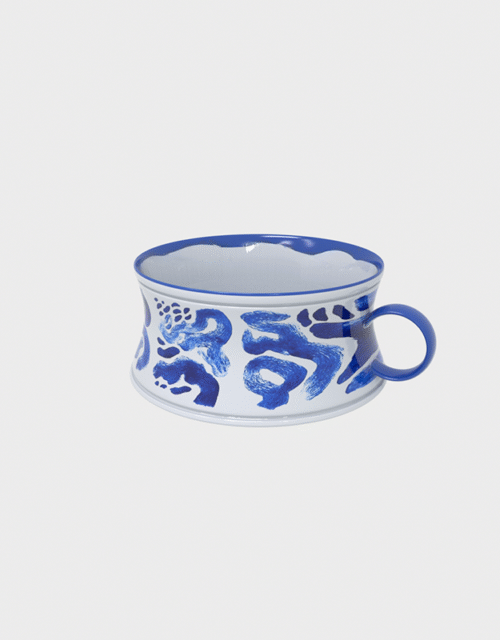 Price range: $32.00 through $47.00
Handmade Tea Cup with Handle | Short & Curvy Belly Style
-
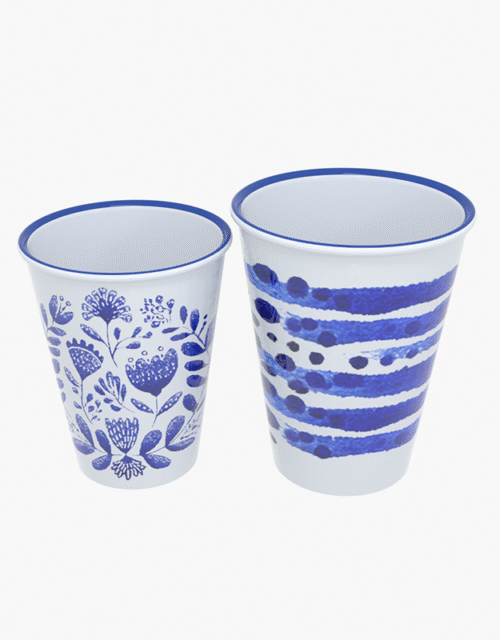 Price range: $28.00 through $45.00
Personalized Porcelain Mug without Handle | Minimalist Coffee Cup
-
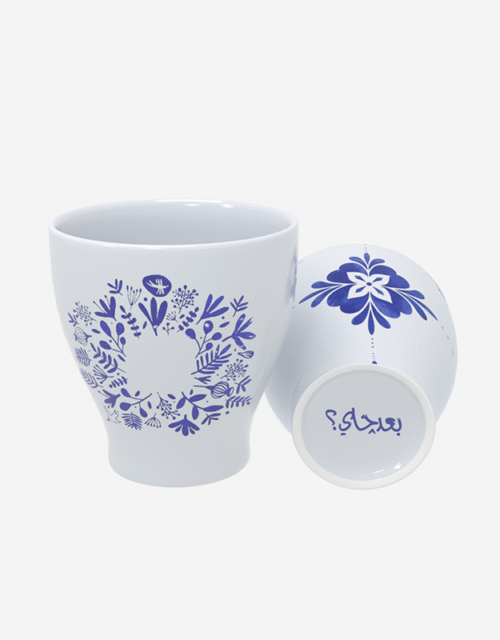 Price range: $22.00 through $35.00
Personalized Porcelain Tea Cup | Minimalist Handleless Cup
-
 Price range: $29.00 through $47.00
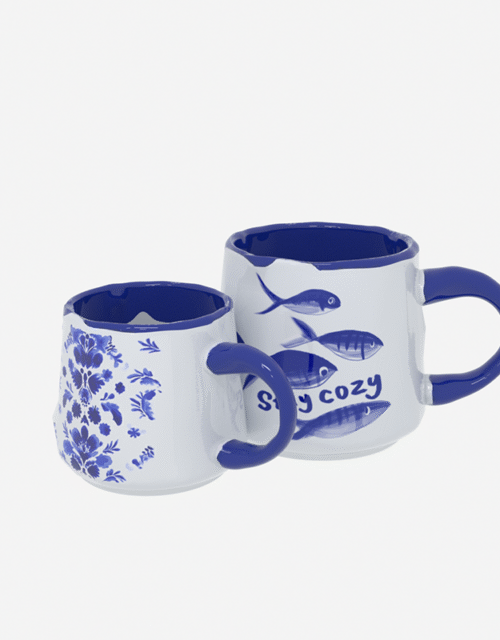
Hand-Thrown Blue & White Porcelain Mug | Personalized Handmade Coffee Cup